

Step-by-Step Guide to Applying for Medicine in Italy (2026 Complete Guide)
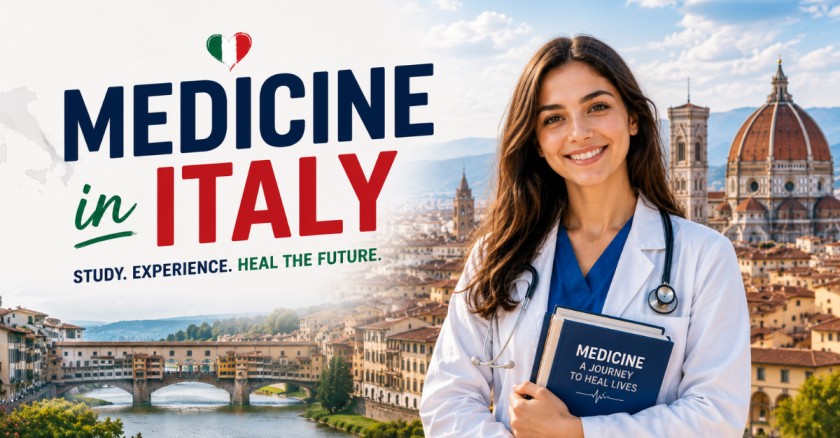
Italy has emerged as one of the most attractive destinations for international students pursuing medicine. With globally recognized universities, affordable tuition fees,
English-taught programs, and access to the European healthcare system, thousands of students from around the world now choose Italy for their medical education.
Unlike many countries where medical studies are extremely expensive, Italy offers
High-quality education at comparatively lower costs, making it an ideal destination for aspiring doctors.
This comprehensive guide explains every stage of the application process, from choosing universities to obtaining a visa and beginning your medical journey.
Why Study Medicine in Italy?
Italy combines centuries of academic excellence with modern healthcare education. Italian medical degrees are recognized across Europe and many other countries worldwide.
Key Benefits
- English-taught MBBS/MD programs
- Tuition fees ranging from €500 to €5,000 annually at public universities
- Degrees recognized by the European Union and internationally
- Opportunity to practice medicine across Europe after meeting licensing requirements
- Rich cultural heritage and excellent quality of life
- Scholarships and financial aid for international students
- Access to advanced hospitals and clinical training
Step 1: Understand How Medical Education Works in Italy
Medicine in Italy is a single-cycle degree program lasting six years.
Students enter medical school directly after high school, unlike countries such as the USA or Canada, where medicine is studied after a bachelor’s degree.
The program includes:
Years 1–3
- Anatomy
- Physiology
- Biochemistry
- Pathology
- Pharmacology
Years 4–6
- Clinical medicine
- Surgery
- Pediatrics
- Internal medicine
- Practical hospital training
After graduation, students receive the degree:
Laurea Magistrale a Ciclo Unico in Medicina e Chirurgia
Equivalent to an MD degree and recognized throughout Europe.
Step 2: Check Eligibility Requirements
Before applying, ensure you meet the basic eligibility criteria.
Academic Requirements
Applicants generally need:
- Completion of 12 years of schooling
- High school diploma or equivalent
- Biology background
- Chemistry background
- Physics and Mathematics studies
Most universities do not require exceptionally high grades, although competitive scores improve admission chances.
Typical Minimum Requirements
| Qualification | Requirement |
| A Levels | Biology + Chemistry preferred |
| CBSE/ISC | 50–60% minimum |
| IB Diploma | Accepted |
| GCSE/O Levels | Combined with higher secondary qualifications |
Step 3: Choose Universities Offering Medicine in English
Italy currently offers more than 15 universities with English-taught medical programs.
Top Medical Universities in Italy
University of Milan
- One of Italy’s leading medical institutions
- Highly competitive admission
University of Bologna
- Founded in 1088
- Strong clinical training
Sapienza University of Rome
- Among Europe’s largest universities
- Excellent research facilities
University of Padua
- Historic institution
- Outstanding reputation in medicine
University of Pavia
- International student-friendly
University of Turin
University of Naples Federico II
University of Bari
Students can apply to multiple universities but generally sit for one national admission
examination.
Step 4: Understand the IMAT Examination
The International Medical Admissions Test (IMAT) is the entrance examination for English-taught medical programs.
The exam is administered by the Italian Ministry of Education.
Structure of IMAT
| Section | Questions |
| Logical Reasoning | 15 |
| General Knowledge | 4 |
| Biology | 23 |
| Chemistry | 15 |
| Physics and Mathematics | 13 |
| Total | 70 |
Duration
100 minutes
Marking Scheme
- Correct answer: +1.5 points
- Incorrect answer: -0.4 points
- Unanswered: 0
The IMAT is highly competitive, and cut-off scores vary annually depending on demand.
Step 5: Prepare for the IMAT
Preparation should ideally begin 6–12 months before the exam.
Study Subjects
Biology
- Genetics
- Cell biology
- Human physiology
- Evolution
Chemistry
- Organic chemistry
- Inorganic chemistry
- Atomic structure
- Chemical reactions
Physics
- Mechanics
- Electricity
- Energy
Mathematics
- Algebra
- Probability
- Geometry
Logical Reasoning
- Critical thinking
- Problem-solving
- Reading comprehension
Recommended Resources
- Cambridge IMAT preparation books
- Past IMAT papers
- BMAT materials
- Alpha Test IMAT books
Step 6: Complete Pre-Enrollment Through Universally
All international applicants must register through the Italian government portal known as Universitaly.
Through this portal, students:
- Select their first-choice university
- Submit academic information
- Complete pre-enrollment procedures
- Receive application confirmations
The portal usually opens between June and July.
Step 7: Register for the IMAT Examination
Candidates register online and pay the examination fee.
Testing Locations
The IMAT is conducted in many countries worldwide, including:
- UAE
- India
- Pakistan
- UK
- Saudi Arabia
- Egypt
- Singapore
Registration generally occurs during July and August. The examination is usually held in September.
Step 8: Sit for the IMAT Exam
On exam day, candidates should bring:
- Passport
- Registration confirmation
- Required identification documents
Results are normally released within several weeks.
Students are ranked according to their scores, and admission is determined based on national rankings.
Step 9: Receive Admission Offer
Once rankings are published:
Admitted Students
Can proceed with enrollment.
Waitlisted Students
May receive offers as seats become available through ranking scrolls.
Rejected Students
Can reapply the following year.
Step 10: Gather Required Documents
Most universities require:
Academic Documents
- High school transcripts
- Diploma certificate
- Passport copy
- Passport-sized photographs
Legalization Documents
Depending on your country, you may need:
- Apostille
- Declaration of Value (DoV)
- Statement of Comparability from CIMEA
Language Documents
English-taught programs generally do not require IELTS if prior education was in English, though requirements differ among universities.
Step 11: Apply for Student Visa
After receiving admission, students apply for an Italian Type D student visa. Required documents usually include:
- University admission letter
- Passport
- Accommodation proof
- Financial proof
- Health insurance
- Flight reservation
- Visa application form
Processing time can range from two to eight weeks.
Step 12: Arrange Accommodation
Students can choose:
University Residences
- Affordable
- Convenient
- Limited availability
Shared Apartments
- Popular among international students
Private Accommodation
- Higher cost but more privacy
Average Monthly Housing Costs
| City | Monthly Cost |
| Rome | €500–900 |
| Milan | €600–1,000 |
| Bologn a | €450–800 |
| Padua | €350–700 |
| Bari | €250–500 |
Step 13: Understand Tuition Fees
Italian public universities are considerably cheaper than those in the UK or USA.
Annual Tuition Fees
| University Type | Fees |
| Public Universities | €500–5,000 |
| Private Universities | €15,000–25,000 |
Fees are often based on family income.
Step 14: Apply for Scholarships
International students may qualify for:
DSU Regional Scholarships
Benefits include:
- Full tuition waiver
- Free accommodation
- Free meals
- Annual stipend up to €7,000
University Merit Scholarships
Offered by individual universities.
Government Scholarships
Provided through Italian ministries and regional authorities.
Step 15: Obtain Residence Permit After Arrival
Within eight days of arriving in Italy, students must apply for a:
Permesso di Soggiorno (Residence Permit)
This document allows legal residence during studies.
Cost of Studying Medicine in Italy
| Expense | Annual Cost |
| Tuition | €500–5,000 |
| Accommodatio n | €3,500–9,000 |
| Food | €1,800–3,000 |
| Transportation | €250–500 |
| Miscellaneous | €1,000–2,000 |
| Total | €7,000–15,000 |
Career Opportunities After Graduating
Graduates can:
Continue Residency in Italy
Specializations include:
- Cardiology
- Surgery
- Pediatrics
- Dermatology
- Neurology
Practice Across Europe
Italian medical degrees are recognized throughout the European Union.
Take Licensing Exams Abroad
Including:
- UKMLA (United Kingdom)
- USMLE (United States)
- AMC (Australia)
- MCCQE (Canada)
Pursue Research and Academia
Graduates can enter:
- Biomedical sciences
- Public health
- Medical research
- Clinical education
Suggested Timeline for Application
| Month | Activity |
| January–June | IMAT preparation |
| June–July | University
pre-enrollment |
| July–August | IMAT registration |
| September | IMAT examination |
| September–October | Results and rankings |
| October–November | Visa process |
| November onwards | Begin studies |
Final Thoughts
Italy has transformed into one of the world’s most accessible destinations for medical education. Its combination of affordable tuition, internationally recognized degrees,
English-taught programs, and generous scholarship opportunities attracts thousands of students every year.
Success in the admission process largely depends on early preparation, strong IMAT
performance, and careful attention to documentation and deadlines. With proper planning, studying medicine in Italy can open doors to medical careers not only in Europe but across the globe, making it an excellent pathway for aspiring doctors seeking quality education at a reasonable cost.