
Berlin International University of Applied Sciences, Berlin, Germany
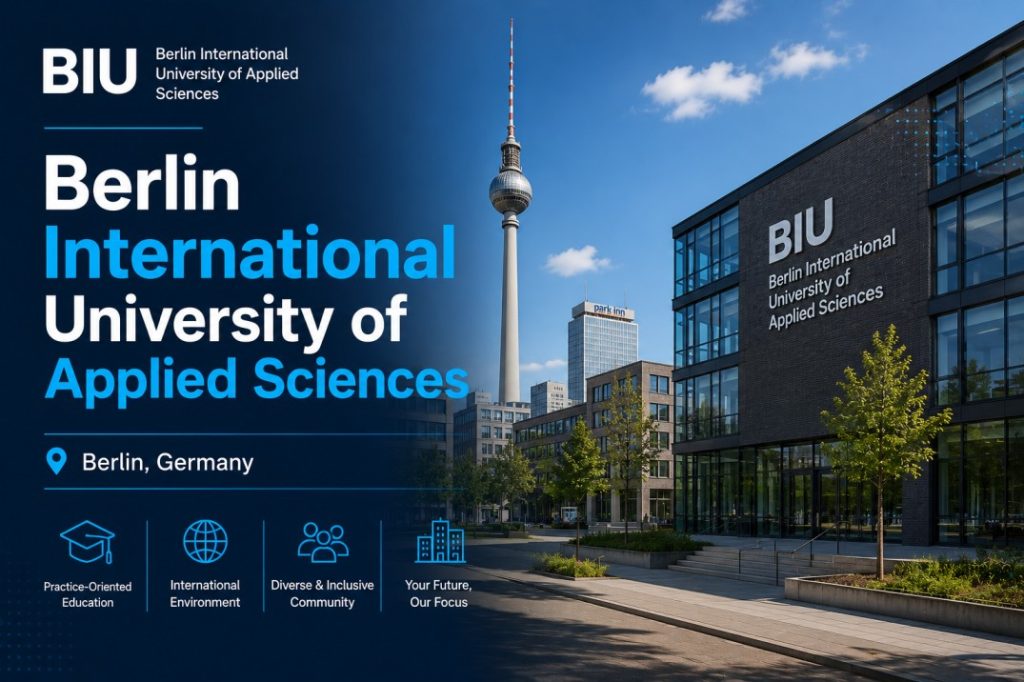
Berlin International University of Applied Sciences is a private, state-recognized university located in Berlin, Germany. Established in 2014, the institution has rapidly gained visibility among international students due to its English-taught programs, multicultural environment, and focus on design, architecture, and business education. Unlike Germany’s large public research universities, Berlin International follows the “University of Applied Sciences” model, emphasizing practical learning, industry collaboration, and career-oriented education.
The university particularly attracts students from Asia, the Middle East, Africa, and Eastern Europe who are looking for:
- Fully English-taught degrees
- Creative and business-oriented programs
- International classroom environments
- Smaller class sizes
- A study experience in Berlin
Although relatively young compared to Germany’s centuries-old institutions, Berlin International has positioned itself as a globally connected university with strong emphasis on intercultural education and applied learning.
Historical Background
Berlin International University of Applied Sciences was founded in 2014 after initially operating as a branch campus connected to the BAU Global Education Network, established by Turkish entrepreneur Enver Yücel. The institution later became an independent university recognized under German higher education law.
The university originally operated under the name:
- BAU International Berlin – University of Applied Sciences
It later rebranded to its current identity to strengthen its international positioning.
The institution is part of the wider BAU Global Network, which includes educational centers and universities across:
- Germany
- Turkey
- United States
- Cyprus
- Georgia
- Canada
- Australia
- New Zealand
This global network allows students opportunities for:
- International exchange
- Collaborative projects
- Cross-campus experiences
- Global academic exposure
Campus and Location
The university campus is located in Charlottenburg, one of Berlin’s well-known central districts.
Campus Address:
Salzufer 6, 10587 Berlin, Germany.
Berlin itself plays a major role in the university’s appeal.
Why Berlin Matters
Berlin is considered one of Europe’s leading cities for:
- Startups
- Creative industries
- Technology
- Architecture
- Design
- International culture
Students benefit from:
- Strong public transportation
- International communities
- Growing tech sector
- Startup networking
- Creative freelance opportunities
Compared to cities like London or Paris, Berlin remains relatively more affordable, although accommodation costs have risen sharply in recent years.
Academic Programs
Berlin International focuses mainly on:
- Architecture
- Design
- Business Administration
All programs are taught entirely in English, which is one of the university’s strongest advantages for international students.
Bachelor’s Programs
Architecture & Design
The university is especially recognized for creative programs such as:
- BA Architecture
- BA Interior Architecture & Interior Design
- BA Graphic Design & Visual Communication
- Product Design
These programs emphasize:
- Studio-based learning
- Portfolio development
- Practical projects
- Design thinking
- Interdisciplinary collaboration
Architecture programs generally last:
- 4 years / 8 semesters
Other design degrees typically take:
- 3 years / 6 semesters
Business Programs
Popular business-related degrees include:
- Digital Business & Management
- International Management & Marketing
- Organizational Psychology
- Data Science & Business
These programs combine business theory with:
- Analytics
- Technology
- Leadership
- International business perspectives
Master’s and MBA Programs
Graduate-level programs include:
- MA Interior Design
- MA Interior Architecture
- MBA (Master of Business Administration)
Master’s programs are typically:
- 1–2 years long
- Fully English-taught
- Practice-oriented
Teaching Style and Learning Environment
Berlin International promotes a highly interactive teaching model.
According to official university sources, the institution emphasizes:
- Small class sizes
- Group collaboration
- Project-based learning
- International teamwork
- Individual mentorship
The university’s teaching philosophy differs significantly from Germany’s traditional public universities, where lectures are often:
- Large
- Highly theoretical
- Independent-study focused
At Berlin International, students usually experience:
- Closer faculty interaction
- Studio workshops
- Continuous assessments
- Collaborative assignments
This teaching style particularly appeals to:
- Creative students
- International students
- Students transitioning from school-style education systems
International Student Diversity
One of the university’s most distinctive characteristics is its international environment.
Official university information states that students and faculty come from over:
- 92 countries worldwide
The university intentionally markets itself as:
- Multicultural
- International
- Globally connected
For many students, this creates:
- Easier social integration
- Less language pressure
- More culturally diverse classrooms
Unlike many German universities where German-language skills are essential from the beginning, Berlin International allows students to study fully in English.
However, students still benefit greatly from learning German for:
- Part-time jobs
- Networking
- Internships
- Daily life
- Long-term employment
Tuition Fees and Costs
Since Berlin International is a private university, students pay considerably higher tuition than public German universities.
Bachelor’s Tuition Fees
For non-EU students:
- Approximately €4,640 per semester
- Roughly €9,000–€10,000 annually
Master’s Tuition Fees
Non-EU students generally pay:
- €5,550–€6,500 per semester depending on the program
Living Expenses in Berlin
Students usually require:
- €900–€1,500 monthly
Expenses include:
- Accommodation
- Insurance
- Transportation
- Food
- Internet
- Study materials
Housing remains one of the biggest challenges in Berlin due to increasing demand and limited student accommodation.
Accreditation and Recognition
Berlin International is:
- State-recognized in Germany
- ACQUIN-accredited
- Non-profit institution
This means its degrees are legally recognized within the German higher education system.
However, the university does not have the same global research prestige as elite German public universities such as:
- Technical University of Munich
- Humboldt University of Berlin
- Technical University of Berlin
Its focus is more on:
- Applied education
- Portfolio-building
- Creative industries
- Professional preparation
rather than large-scale scientific research.
Student Reviews and Public Perception
Student opinions online are mixed.
Positive Feedback
Students frequently praise:
- International environment
- Friendly campus culture
- English-only instruction
- Small class sizes
- Creative freedom
- Design-focused learning
Creative programs, especially architecture and interior design, tend to receive stronger feedback from students.
Criticism and Concerns
Common criticisms include:
- High tuition fees
- Lower prestige compared to public universities
- Limited recognition among some German employers
- Administrative inefficiencies
Reddit discussions often reflect Germany’s broader skepticism toward private universities. Some users describe private institutions as expensive alternatives to tuition-free public universities.
However, other users argue that applied sciences universities can provide:
- Better supervision
- More structured teaching
- Stronger student support systems
The overall experience appears to depend heavily on:
- Program quality
- Student initiative
- Career goals
- Networking efforts
Career Opportunities After Graduation
Graduates commonly pursue careers in:
- Architecture
- Interior Design
- Graphic Design
- Branding
- UX/UI Design
- Marketing
- Business Development
- Startup ecosystems
Berlin’s economy offers opportunities particularly in:
- Creative industries
- Tech startups
- Media agencies
- Design studios
Germany also allows international graduates to remain in the country temporarily after graduation to search for employment.
However, long-term employability often depends on:
- German language proficiency
- Internship experience
- Networking
- Portfolio quality
- Technical skills
Students who actively build professional experience during their studies generally achieve stronger outcomes.
Is Berlin International Worth It?
The answer depends on the student’s priorities and financial situation.
It May Be Suitable If:
- You want fully English-taught education in Germany
- You are interested in architecture or design
- You value multicultural environments
- You prefer practical learning
- You want smaller class sizes
It May Not Be Ideal If:
- You want a highly ranked research university
- You seek low-cost education
- You prioritize strong employer prestige in Germany
- You prefer theoretical academic systems
For creative students especially, Berlin International may offer valuable opportunities through Berlin’s design and startup ecosystem.
Conclusion
Berlin International University of Applied Sciences represents a modern, internationally focused approach to higher education in Germany. By combining English-taught education, practical learning methods, and a highly multicultural campus, the university has established itself as a notable option for students interested in design, architecture, and business studies.
Its biggest strengths include:
- International student diversity
- Berlin location
- English-medium instruction
- Creative and applied learning environment
At the same time, students must carefully consider:
- High tuition costs
- Competitive German job market
- Reputation differences between private and public universities
For motivated students willing to build strong portfolios, industry experience, and professional networks, Berlin International can provide a meaningful pathway into Germany’s creative and international career landscape.